












by Annika Urm
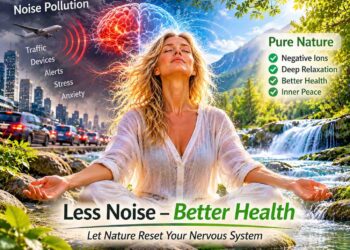
How chronic noise pollution impacts mental health, and simple ways to protect your energy, raise your frequency, and find peace. Step out of the robotic digital world and heal your mind with natural soundscapes, grounding, and the power of presence.
The Unseen Soundscape: How Chronic Noise Pollution, Environmental Frequencies, and Auditory Conditioning Impact the Nervous System and Mental Health
Noise Pollution- The Invisible Auditory Assault
What if every sound you hear—every persistent beep, low-frequency hum, electronic vibration, and background buzz—isn’t random? What if it is part of a covert system designed to control your thoughts, emotions, and even your behavior? As explored in discussions on modern acoustic conditioning and the hidden power of sound, our ears are subjected to relentless stimulation that shapes our neurological state. Could the everyday sounds in our cars, phones, and appliances be deployed for conditioning, while natural frequencies and grounding offer the ultimate path to healing?
As discussed by author and researcher Kevin Trudeau in his insights on The Sound Of Control (watch the video here), every persistent beep, low-frequency hum, and electronic vibration is not merely a random byproduct of modern life, but an active force that conditions our nervous system. What if these everyday sounds are part of a broader environment designed to keep us in a constant state of tension?
Unlike our eyes, which we can close to block out visual chaos, our ears never shut off. Even during deep sleep, the human auditory system remains fully active, continuously scanning the surroundings for signs of danger. Yet, modern society largely treats noise pollution as a minor annoyance rather than a serious biological hazard. Making this problem worse is the rapid shift of human attention into digital spaces. When people spend almost all of their waking hours focused on screens and virtual worlds, they become disconnected from their physical bodies and immediate surroundings. In this state of distraction, the subtle, cumulative damage of environmental sound goes largely unnoticed—until the nervous system reaches a breaking point.
Neurological Impacts of Chronic Noise Pollution: When the Cup Overflows
To understand why continuous background noise is so destructive, we need to look at how the human nervous system processes sound. Every sound wave that enters the ear is converted into electrical signals that travel directly to the brainstem and the amygdala—the brain’s primary threat-detection center. This pathway works much faster than conscious thought. When the brain registers repetitive, jarring, or unnatural frequencies, it interprets them as potential danger, triggering stress hormones like adrenaline and cortisol and activating the sympathetic nervous system (the “fight-or-flight” response).
In nature, this stress response is designed to be brief: a predator rustles the bushes, stress hormones surge, the threat passes, and the nervous system returns to calm. In modern environments, however, the acoustic triggers never stop. A continuous “beep, beep, beep” from household electronics, seatbelt reminders, scanner tones, and urban machinery forces the nervous system into a state of chronic tension.
We can picture the human nervous system as a cup or a balloon. Every minor sound stressor—a buzzing refrigerator, a notification ping, distant traffic—adds another drop of water to the cup or another breath of air into the balloon. Because no single sound seems catastrophic on its own, people ignore the buildup. Over weeks, months, and years, however, the cup reaches its brim. Eventually, a single, seemingly minor sound becomes the final drop that causes the entire system to overflow or burst. Physically, this leads to nervous system exhaustion, chronic systemic inflammation, high blood pressure, disrupted sleep cycles, and an inability to enter deep, restorative rest.
The Intersection with Mental Health: Depression, PTSD, and Auditory Triggers
While chronic noise pollution wears down the resilience of even healthy individuals, its impact on those already battling physical illness, depression, or post-traumatic stress disorder (PTSD) is devastating. A nervous system weakened by trauma or prolonged emotional distress has a much lower tolerance for sensory stress. When a person is already carrying the heavy burden of depression, unresolved trauma, high-stress personal conflicts, or relentless external pressures, their nerves are already stretched thin.
In this vulnerable state, an inescapable, irritating, or repetitive sound acts as an immediate neurological trigger. Rather than merely causing mild irritation, the persistent noise bypasses rational coping mechanisms and sparks sudden emotional overwhelm, panic, or explosive anger. The brain, unable to filter out the intrusive sound, becomes trapped in a loop of high alert.
Furthermore, true physical and mental recovery becomes virtually impossible inside a standard, noise-polluted environment. Consider what happens when a person is physically sick—even with a straightforward condition like a fever—and is forced to rest in a room filled with electronic beeps, low-frequency hums, and artificial vibrations. Cellular repair, immune defense, and nerve recovery require the body to shift into a state of deep calm (“rest and digest”). Constant low-frequency noise and sudden electronic alerts keep the body locked in stress mode, effectively blocking recovery and keeping the individual trapped in a prolonged state of sickness and exhaustion. In standard modern living conditions (noise pollution), where artificial sounds reach every room, the nervous system is denied the true silence required to heal.
Behavioral Conditioning and the Erosion of Awareness
Beyond direct physical stress, repetitive environmental sounds pollution play a powerful role in shaping human behavior and compliance. Modern life is built around acoustic commands. Consider the constant car seatbelt chime, the relentless beeping of an open fridge door, or the urgent pings of phone notifications. These sounds are specifically engineered using frequencies that the human ear finds uncomfortable, creating a mild irritation that only stops when the person obeys the machine’s command.
Over decades, this constant cycle of sound prompt and automatic obedience trains the human brain to react reflexively to external cues without conscious thought. Combined with heavy immersion in virtual environments, this conditioning creates a trance-like state of sensory fatigue and detachment. When people are overwhelmed by background noise and absorbed in digital feeds, their awareness of the real world collapses. They move through physical spaces on autopilot—almost like robots—failing to notice what is happening just a meter away from them. By disconnecting from their own senses and surrendering attention to external triggers, people lose control over their emotional state and immediate surroundings.
The Severe Dangers of Sensory Breakdown and Acoustic Overload
When chronic auditory stress, unremitting environmental frequencies, and nervous system exhaustion are left unaddressed, the consequences can escalate from daily fatigue to severe, life-threatening crises. When the human nervous system is pushed past its absolute physical limit—when the metaphorical balloon finally bursts—the results can be catastrophic:
- Acute Neurological Collapse and Seizures: Intense, loud, or rhythmic low-frequency acoustic environments—such as the heavy bass vibrations found in nightclubs or industrial settings—can overstimulate the central nervous system. In sensitive individuals, extreme sensory and sound overload can trigger severe neurological distress, fainting, or even seizures. Tragically, in loud, chaotic, or distracted environments, a person collapsing from sensory or physical failure can go completely unnoticed by those around them until it is too late.
- Severe Mental Breakdown: Prolonged, inescapable auditory agitation deprives the brain of sleep and emotional stability. Over time, relentless sensory distress can drive an exhausted mind toward acute nervous breakdowns, severe anxiety, or a complete loss of mental clarity—states often described as “losing one’s mind.”
- Despair and Suicidal Thoughts: For individuals already suffering from severe depression or trauma, the inability to find relief from internal and external noise creates a suffocating sense of entrapment. When healing feels impossible and every waking moment brings nervous system agitation, the resulting exhaustion and despair can tragically push vulnerable individuals toward self-harm or suicide.
- Acoustic Weapons and Directed Sound: The destructive potential of sound is not just theoretical; sound energy has long been studied and used in crowd control and military applications. Long-range acoustic devices (LRADs) and infrasound generators use targeted high-decibel or ultra-low-frequency waves to cause immediate disorientation, nausea, pain, panic, and physical collapse, proving just how profoundly sound waves can disrupt human biology.
Because standard modern environments (noise pollution) rarely offer true acoustic safety, individuals suffering from severe sensory and nervous system overload often find that normal recovery is impossible until they physically leave the noisy environment.
Solutions and Recovery for noise pollution: Raising Your Frequency, Grounding, and Reclaiming Sanctuary
Healing an overworked, overstimulated nervous system requires more than simply trying to “ignore” the noise. It demands an active, conscious effort to step out of the virtual world, become fully present in the physical body, and intentionally raise your energetic and vibrational baseline. True recovery begins when we shift our awareness, step out of low-frequency artificial noise pollution traps, and reconnect with the coherent rhythms of the natural world.
1. Raising Your Frequency and Cultivating Presence
The core of true noise pollution recovery lies in raising your frequency—moving away from a state of robotic, low-vibrational automated compliance and stepping fully into conscious awareness. When you are 99% lost in virtual worlds or numbed by background static, you are vulnerable to external programming. By deciding to be truly present, you shift your mental state from passive victimhood to empowered creator. Raising your frequency means anchoring your mind in the here and now, elevating your thoughts above fear and stress, and refusing to let external noise dictate your internal state.
2. Eliminating Artificial Sound Triggers
The practical first step in clearing your energy field and nervous system is finding and removing unnecessary man-made noise from your immediate living space. Silence non-essential alarms, turn off appliance chimes where possible, switch off background television hums, and set strict limits on phone notifications. Taking control of your immediate sound environment sends an instant signal of safety to the brain.
3. Acoustic Healing Through Natural Soundscapes
Unlike the harsh, repetitive waves of electronic beeps, natural sounds follow organic, high-vibrational patterns that the human brain evolved to recognize as signs of safety and life. Spending time in natural soundscapes actively shifts the nervous system out of stress mode and into deep repair:
- Water Sounds: A babbling stream, steady rainfall, or the rhythmic crash of ocean waves creates a soothing natural sound layer that covers up jarring background noises and slows brainwave activity into deeply relaxed states.
- Nature Rhythms: The evening chorus of crickets, wind moving through leaves, and morning birdsong signal to the primal brain that the environment is safe, lowering stress hormones and easing mental tension.
4. Grounding, Earth Contact, and Electromagnetic Restoration
Beyond sound, the modern nervous system is constantly strained by ambient electromagnetic fields (EMFs) and static electricity buildup from indoor living and electronic devices. Re-establishing direct physical contact with the Earth—often called grounding or earthing—provides a powerful physical and vibrational reset:
- Walking Barefoot on Sand and Earth: Walking barefoot along damp beach sand, grass, or natural soil connects the body directly to the Earth’s natural electrical surface, helping release static tension and calm overactive nerves.
- Full-Body Immersion in Sand: Burying yourself in warm beach sand offers a profound dual benefit: the gentle weight of the sand calms the nervous system through deep physical pressure, while surrounding the body in the Earth’s natural electromagnetic field, encouraging deep muscular and neurological release.
- Floating and Swimming in Natural Waters: Floating or swimming in the ocean, lakes, or natural mineral waters takes gravitational pressure off the spine and joints, blocks out harsh airborne noise, and surrounds the body with calming water movement.
5. Negative Ions and Atmospheric Vitality
Natural environments rich in moving water, coastal surf, forests, and sunlight are full of negative air ions—oxygen molecules carrying an extra electron. In contrast, indoor spaces filled with computers, synthetic materials, and air conditioning are heavily depleted of negative ions. Breathing negative-ion-rich air near waterfalls, crashing ocean waves, or pine forests supports balanced mood, healthier serotonin levels, deeper breathing, and a clear, calm mind.
6. Creating Your Personal Safe Sanctuary
Ultimately, lasting protection against environmental overwhelm noise pollution comes from building your own safe harbor. By stepping away from virtual distractions, raising your personal frequency through mindfulness and nature immersion, and consciously curating a quiet, grounded environment, you give your nervous system the sacred space it needs to exhale, repair, and thrive.
Noise pollution by Annika Urm
Who is Annika Urm?
Annika Urm is an international journalist and an international financial manager with a master’s degree in accounting and financial management, whose background in accounting and financial management has shaped her deep understanding of the logic of balance and equilibrium. During her studies in Medical Nursing, she found that the human body operates on the same principle as a financial balance: health does not depend on individual indicators, but on whether the system as a whole is in balance.
Annika’s focus is on the human body as a whole, where fluid balance, electrolytes, acid-base balance, vitamins, minerals, hormones and metabolism play a decisive role. Annika approaches health systematically – looking at both the tests and the person behind them, always asking what is missing in the body, what is in excess and how to restore balance.
This way of thinking is especially clear in intensive care, where the patient cannot speak and decisions are made based on physiology, tests and clinical logic. For Annika, this is not an exceptional situation, but a reflection of the fact that everyone’s health ultimately comes down to the same principle – the body’s balance.
When restoring balance, she also considers the regulation of the nervous system and metabolism to be important, where sleep, physical activity (especially strength training), following the circadian rhythm, and alternating cold and hot as physiological signals that teach the body to adapt and recover play a central role. In her opinion, these are not “lifestyle tips”, but part of the body’s biological regulation and health maintenance mechanisms.
In addition to nursing, Annika works with the ketogenic diet as one possible tool in supporting metabolic balance, but her central interest and passion has always been one: human health and the body’s ability to recover when the balance is in place.
Read more about Annika Urm here:
AU News today https://news.annikaurm.com/
Annika Urm https://annikaurm.com/
Annika Urm – your guide to a healthy lifestyle
Annika is the creator of the Golden Stevia brand and recipes, the author of recipe books and a keto and low carb diet nutritionist, specializing in low carb, keto and diabetes-friendly nutrition. Her approach combines science-based nutrition, practical living and natural balance. A sweet life without sugar is possible – starting with simple steps All products and
services: https://goldenstevia.com If you want a personal consultation and have a sincere desire to get healthy – for example, to reverse type 2 diabetes or lose weight with a keto diet – then your trusted guide is nutritionist Annika Urm.
