









By Annika Urm
The Sunrise Reset: How Early Light Rewires Your Brain, Hormones, and Mitochondria
Annika Urm: “So far in 2026, I have personally logged over 150 sunrises while traveling across various continents—from different parts of Europe to Asia and Turkey. “
Wherever I go in the world, I see the exact same pattern every single morning: almost nobody is outside to witness the sunrise.
We live in a world where people spend thousands of dollars on red light therapy devices, biohacking supplements, and sleep trackers, yet completely ignore the most powerful, biology-altering tool available to humans—and it happens for free every single 24 hours.

Yes, I know what you’re thinking: “Annika, not everyone lives in a sunny climate or has clear skies every morning.” But let’s be honest: even in regions where the sun shines bright every single dawn, people stay indoors staring at screens, drinking coffee under blue light LEDs, and wondering why they feel fatigued, inflamed, and stressed.
Having tested this practice consistently across different countries and climates this year, I don’t just speak from scientific theory—I speak from direct biological experience. Here is the exact human physiology behind why morning sunlight is the ultimate, irreplaceable foundation for your health, hormones, and cellular power.
Capturing the Magic: Budapest and the Global Sunrise Club
Throughout my global journey of 150 consecutive sunrises, the most vibrant and crowded gathering I witnessed was at Fisherman’s Bastion in Budapest, overlooking the majestic Danube River and the Hungarian Parliament.

Every single morning, this historic viewpoint comes alive with locals, travelers, and 3 to 5 newlywed couples capturing their wedding photos in the golden morning light. Seeing people naturally gather in such numbers proved to me that modern cities desperately need dedicated spaces for communities to greet the dawn together.
The Biological Power of Light: How Sunlight and Red Light Therapy Optimize Human Physiology
SunLight is far more than just a source of illumination—it is a fundamental biological input that directly dictates human health, hormone regulation, cellular energy, and longevity. From the moment natural sunlight touches our skin and eyes in the morning, a cascade of complex biochemical reactions is triggered throughout the human body. Understanding how sunlight and specific wavelengths of light interact with our physiology reveals why light exposure is one of the most powerful tools for health optimization.
1. The Master Clock, Cortisol, and the Circadian Sleep-Wake Cycle
There is no need to fear UV radiation during early morning sunrise or evening sunset, as these hours carry no harsh UVB rays. Morning sunlight acts as the primary reset button for the human brain. Morning sunlight stimulates melanopsin receptors in the retina, signaling the suprachiasmatic nucleus (SCN)—the master circadian clock in the brain.
Upon activation, this master clock synchronizes the biological clocks of every single organ and cell in the body. It triggers a natural morning cortisol boost to elevate body temperature, increase blood pressure, and wake up the brain, while stimulating serotonin production to enhance mood and mental focus.
Crucially, this morning light signal sets a biological timer: approximately 14 to 16 hours later, the brain suppresses cortisol and begins synthesizing melatonin to ensure deep, restorative sleep.
2. Hormonal Modulation: Dopamine, Insulin, Metabolism, and Appetite
Beyond circadian rhythm, full-spectrum sunlight acts as a potent regulator of the endocrine system:
- Dopamine and Drive: Bright light entering the eye stimulates dopamine pathways in the brain, heightening natural drive, cognitive sharpness, and overall motivation.
- Insulin Sensitivity and Blood Sugar: Early daylight exposure improves insulin sensitivity in your body’s muscles and tissues. By helping cells absorb glucose more efficiently, sunlight stabilizes blood sugar levels and prevents sudden daytime energy crashes.
- Appetite Regulation (Leptin & Ghrelin): Natural light plays a vital role in balancing hunger hormones. It lowers ghrelin (the hunger hormone) while optimizing leptin (the satiety hormone), helping prevent overeating and unnecessary cravings.
- Thyroid Function: Red and near-infrared light wavelengths stimulate the thyroid gland, enhancing the conversion and production of thyroid hormones (T3 and T4) that govern overall metabolic rate.
- Steroid Hormones & Stress Reduction: Ultraviolet light exposure stimulates the pituitary gland to increase the synthesis of sex hormones, including testosterone and estrogen. Simultaneously, sunlight triggers the skin to release beta-endorphins, naturally lowering systemic stress and elevating feelings of well-being.
3. Red Light, Mitochondrial Bioenergetics, and Satiety
Morning sunlight contains an exceptionally high concentration of red and near-infrared (NIR) wavelengths. Unlike shorter UV rays, NIR light penetrates deep into dermal layers, muscle tissues, and internal cells to interact directly with mitochondria—the powerhouses of our cells.
Light energy travels in discrete units called photons. Within the mitochondria, specialized photo-acceptors (specifically the enzyme cytochrome c oxidase) absorb these red and NIR photons. This light absorption stimulates the mitochondrial electron transport chain, dramatically accelerating the production of adenosine triphosphate (ATP), the primary energy currency of human life.
When mitochondria combine photon energy with hydrogen and electrons derived from food nutrients, ATP production reaches peak efficiency. Because cells are fully energized at a fundamental level, the brain receives strong bioenergetic signals that reduce cellular stress and maintain prolonged feelings of fullness and physical energy. Higher ATP levels accelerate tissue repair, clear metabolic waste, and reduce systemic inflammation.
4. Retinal Health and Ocular Mitochondria
The photoreceptors and ganglion cells in the human retina require massive amounts of energy to process visual information. As a result, the retina contains the highest concentration of mitochondria of any tissue in the entire human body.
Because retinal cells are exposed to high oxidative stress throughout the day, their mitochondrial efficiency naturally declines with age. Exposure to low-intensity morning red light charges these densely packed retinal mitochondria, restoring their energy production, repairing cellular damage, and protecting against age-related macular degeneration and vision loss.
5. Red Light Therapy, Fibroblast Activation, and Collagen Synthesis
While targeted red light therapy devices emit specific red (660 nm) and near-infrared (850 nm) wavelengths in clinical settings, these exact same beneficial wavelengths are naturally abundant in direct sunlight—especially during sunrise, early morning hours, and sunset.
When these light wavelengths reach specialized connective tissue cells called fibroblasts, the influx of light energy stimulates ATP production within their mitochondria. Charged with fresh cellular energy, fibroblasts increase the synthesis of collagen and elastin proteins. This naturally repairs damaged tissue matrices, improves skin elasticity, accelerates healing, and supports long-term skin health.
6. Biophotons: Light-Based Cellular Communication
Human biology does not merely respond to light—it produces light. During routine metabolic reactions and electron transfers inside the mitochondria, cells naturally release ultra-weak photons known as biophotons.
These extremely low-intensity light emissions are not random waste; rather, cells utilize biophotonic signals to communicate instantaneously with neighboring cells. This light-based cellular network coordinates complex biological functions, cellular division, and tissue repair across the entire organism, proving that human beings are fundamentally light-driven biological systems.
7. The Inner Light: Reconnecting with the Source
Beyond biological clock mechanisms and hormones, humans are fundamentally beings of light. The entire universe exists within us. You are the creator, and your true purpose on this earth is to reconnect with the infinite source of light and creation that already resides inside you.
We come to this earth to create, and the only true rule is simple: do no harm, and take nothing from anyone. Through this deep reconnection comes true awakening—bringing light to see who you truly are. It is the ultimate realization of self: “I am, we are the one.” We are all here together as the one.
7. Vitamin D Synthesis: The Solar Hormonal Cascade
A little-known fact is that you cannot get Vitamin D from early morning or late afternoon sunlight. Vitamin D production occurs only when UVB rays are present—specifically during midday, when the sun is high enough in the sky.
When natural sunlight hits exposed skin, its ultraviolet B (UVB) rays penetrate the outer skin cells, known as keratinocytes. This light energy interacts with a specialized form of cholesterol in the skin called 7-dehydrocholesterol, rapidly converting it into previtamin D3.
Over the next few hours, internal body heat converts this unstable previtamin into thermal-stable Vitamin D3 (cholecalciferol). Once formed, Vitamin D3 enters the bloodstream and travels straight to the liver, where it is converted into 25-hydroxyvitamin D. Finally, the kidneys process this compound into 1,25-dihydroxyvitamin D—the active steroid hormone that regulates calcium absorption, strengthens bone density, modulates immune function, supports overall cardiovascular health, and plays a vital role in maintaining pancreas function and insulin production to prevent diabetes.
To safely produce Vitamin D naturally, consider the following guidelines:
- Gradual Exposure: Start with short periods of midday sun exposure—around 15 to 30 minutes—to allow your skin to build tolerance and naturally produce Vitamin D without burning.
- Avoid Chemical Sunscreens: Do not apply commercial sunscreens—they contain toxic chemicals that block healthy light absorption and act as poison to your skin and bloodstream.
- Natural Protection First: Your main protection against sunburn is shade. When you need physical protection, use clothing like hats and long sleeves made exclusively from natural fabrics (such as cotton or linen) to avoid adding synthetic plastic toxins to your body.





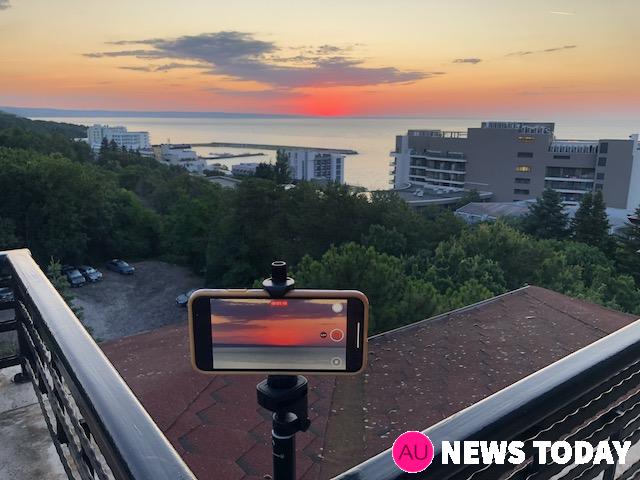






Join the Global Sunrise Club Initiative by Annika Urm!
During my 150-day global sunrise journey across Europe, Asia, and Turkey in 2026, I witnessed firsthand how morning light transforms health and brings people together. The most vibrant gathering spot was at Fisherman’s Bastion in Budapest, where 3 to 5 newlywed couples alongside locals gather every single morning to welcome the golden dawn.
Seeing people naturally come together inspired me to establish the Sunrise Club worldwide. The mission is simple: to bring communities outside at dawn, educate people on circadian biology, and restore this powerful, natural ritual to our daily lives.
How to Join the Movement Sunrise Club worldwide:
- Reset Your Rhythm: Step outside within the first hour of sunrise to soak in the natural red and near-infrared light for your brain, hormones, and mitochondria.
- Gather Your Community: Pick a local spot in your city—just like Fisherman’s Bastion in Budapest—and invite friends, family, or neighbors to greet the dawn together.
- Share the Light: Tag #SunriseClub and #AnnikaUrm to connect with our global community of early risers.
👉 Read the foundation story: Sunrise: The World’s Most Powerful Free Biohack by Annika Urm
Author of article – Annika Urm

Annika Urm is a financial manager with a master’s degree, whose background is in accounting and management developed a deep understanding of the logic of balance and equilibrium. While studying medical nursing, she discovered that the human body functions on the same principle as a financial balance sheet: health does not depend on individual indicators, but rather on whether the system is in balance.
Annika focuses on the human body as a whole, in which fluid balance, electrolytes, acid-base balance, vitamins, minerals, hormones, and metabolism all play a key role.
Annika takes a systematic approach to health—looking at both test results and the person behind them, and always asking what the body is lacking, what it has in excess, and how to restore balance.
This approach is particularly evident in intensive care, where the patient is unable to speak and decisions are made based on physiology, test results, and clinical logic. For Annika, this is not an exceptional situation, but a reflection of the fact that everyone’s health ultimately boils down to the same principle—the body’s balance.
In restoring balance, he also considers the regulation of the nervous system and metabolism to be important, where sleep, physical activity (especially strength training), adherence to the circadian rhythm, and the alternation between cold and heat play a central role as physiological signals that teach the body to adapt and recover. In his view, these are not “lifestyle tips,” but rather part of the body’s biological regulation and mechanisms for maintaining health.
In addition to nursing, Annika explores the ketogenic diet as one possible tool for supporting metabolic balance, but her primary interest and passion have always been the same: human health and the body’s ability to heal itself when that balance is in place.
For more information about Annika Urmi, click here:
AU News today https://news.annikaurm.com/
Annika Urm https://annikaurm.com/
Annika Urm – Your Guide to a Healthy Lifestyle
Annika is the creator of Golden Stevia recipes, cookbooks, and a nutrition consultant specializing in keto and low-carb diets, with a focus on low-carb, keto, and diabetes-friendly nutrition. Her approach combines science-based nutrition, practical living, and natural balance
